
Navigating Constant Organizational Change: A Proactive Leader’s Guide to Innovation
Posted on October 15, 2025
Workplace change isn’t a one-time, champagne and silly hats event like your 50th birthday; it’s more like your cell phone bill that seems to come so quickly every single month. Leadership Training built around the 3C Framework prepares leaders for the continuous uncertainty. Organizations today are living in a Groundhog Day of repeating disruption and change, marked by constant technological advancements and new competitors.
When the path keeps shifting in front of us, our natural human instinct is to cling to what we know. We feel safe in the familiar, but since we can’t go backwards, the resulting stress of resisting change is a fast-track ticket to exhaustion, anxiety, and burnout.
But there’s a better way to survive this seemingly inescapable predicament. Proactive leaders learn to pause instead of react, and build solutions instead of calamities. The future belongs to those who can operate with extreme agility in the face of high levels of ambiguity.
Building Tolerance of Ambiguity for Leaders
These leaders have built their Tolerance of Ambiguity (TOA). If we are tolerant of ambiguity, we are more comfortable with the unfamiliar and with change, and we seek to find solutions to complex challenges instead of settling for easy solutions or sticking with the status quo.
The good news? TOA is not a fixed trait. It’s a competency you can develop, like that lazy butt muscle that, for some weird reason, makes my knee hurt. Just like my physio exercises to strengthen my gluteal muscles, you can strengthen your TOA to transform uncertainty into an opportunity for growth and innovation.
We all know that if we keep doing what we’ve been doing, we will fall behind while the bold trailblazers get first-mover advantage. However, it’s also clear that those who move so fast they don’t stop to assess and evaluate their destination might end up in the wrong place. I’ve had that feeling before, like I’m a draft horse, leaning into the plow and working hard to get the job done, only to look up at the end of the day and realize I was in the wrong field.
Paradoxical Leadership
This paradox of moving fast while also taking the time to review and regroup is at the crux of modern leadership. In a paradox, we can hold many things to be true. We need to use AI while also leveraging human skills to their advantage. We need to find new opportunities while also maximizing our current markets. Our ability to hold two seemingly contradictory things to be true will help us adapt to change, continue to learn, and face disasters with equanimity.
Those of us with positive attitudes toward ambiguity tend to be more creative, effective leaders, and overall better performers.
How Tolerance of Ambiguity Empowers Leaders
Tolerance of Ambiguity (TOA) is the ability to deal effectively with uncertain situations, reflecting an individual’s capacity to manage novel and complex circumstances without succumbing to frustration.
Researchers from Australia have expanded the traditional TOA measures from individual factors to incorporate a workplace-specific dimension.
In this research, there are 9 dimensions that generally fall under three categories:
- Comfort with Ambiguity
- Desire for Challenging Work
- Managing the Uncertainty (this is the workplace-specific one)

The Cost of Intolerance – Tolerance of Ambiguity and Burnout
Someone with a low TOA hates the unfamiliar. They might need to review a restaurant’s menu before agreeing to eat there, or they might need to watch a video of a vacation destination before considering a trip.
Low TOA has a serious downside; most importantly, it decreases our mental health. People who lack ambiguity tolerance are more likely to experience stress and anxiety when dealing with uncertain situations.
They are also more prone to burnout and are generally unhappier. Physicians with a low tolerance of ambiguity have lower mental wellbeing, because they are constantly anxious about chasing certainty in an uncertain domain. These physicians are prone to overdiagnosis (doing unnecessary tests to chase certainty). Extra testing seems like a good idea if you’re a patient, because who doesn’t want to be sure? But it actually decreases patient care and satisfaction.
As a veterinarian, I can relate to feeling anxious if I don’t have the answer. The uncertainty is stressful, and having to make decisions based on what we know at the time can be unsettling, because we might realize after the fact that it was the wrong answer. Not because we made the wrong choice, but because of the outcome.
Impact of TOA on Teams
It’s no wonder that a recent Gallup poll found that employee engagement and confidence in leadership are at a 10-year low.
One of the causes for lacklustre teams? The malaise when we lack clear, consistent information about our job function, responsibilities, performance expectations, and goals – otherwise known as role ambiguity.
Role ambiguity is one of the most significant sources of stress for workers worldwide. In a study from Turkey, role ambiguity accounted for 35% of the variance in burnout.
From teachers in China to Physicians in North America, role ambiguity causes stress and burnout, and a high tolerance of ambiguity increases our resilience to burnout.
What if we could have both?
As a leader, removing role ambiguity so that teams actually know exactly what is expected of them will reduce stress and burnout. By increasing TOA in both yourself and your teams, you will develop a buffer that will help them navigate through other types of ambiguity that are not within your control.
Control What You Can, and Build Skills to Tolerate What You Can’t
Leaders often try to eliminate ambiguity through rigid SOPs and structures. This reliance on established processes and attempts to suppress all uncertainty is unsustainable.
Let’s look at this through a distinctly human lens with a metaphor.
Imagine that the world is the ocean, and that change is a riptide, a lethal and often invisible current. In a riptide, like change, often we don’t know it’s affecting us until we have been pulled far from shore, in choppy and cold water.
That’s when we have a choice, to respond instinctively by swimming back to shore (negatory, friend), with status quo and familiar solutions. Or, we can stop, allow the current to take us a bit farther, to assess our options and look at data to make a choice. Do I wave down a boat, swim parallel to shore, or allow it to carry me to a sandbar?
In this metaphor, imagine you’re leading your team on a field trip to the ocean. Do you wait until they get caught in a riptide and rush in to save them? Or do you try to anticipate the changes and help prepare them to navigate any obstacle that might come their way, whether it’s a shark, jellyfish, seaweed, or a riptide?
As a leader, are you a lifeguard or a swim instructor?
- The Lifeguard is Reactive: They spend their day on high alert, jumping in to rescue people after they’re already in trouble. This reactive cycle is exhausting, and if there are too many people in trouble at the same time, it’s curtains.
- The Swim Instructor is Proactive: They teach others how to navigate the currents of change themselves, so that teams can move forward with confidence and make autonomous decisions, thereby fueling their engagement in the organization’s purpose.
Leaders who adopt a “swim instructor” mindset start building an engaged team with individuals who can bring solutions instead of problems. In a culture of creativity, Gallup finds that 50% more people feel empowered to innovate in “best practice organizations”, AKA the sweet sound of silence, as 50% fewer problems slide across your desk every day.
As a locum vet (kind of like a substitute teacher for veterinary clinics), I often walk into new clinics with new teams with zero onboarding, and despite having a high tolerance of ambiguity, it is always stressful.
How do they do things here? What is the vibe? What are the clients like? Where do they send their tests? And perhaps most importantly, where’s the tea station!?
Across the world, I lead new teams through high-pressure, emotional situations with patients who can’t speak, frantic owners, and resource limitations. Sometimes in a new culture or language. You should see my well-rehearsed vomiting and diarrhea charades imitation of a pug. Whether it’s using a paperclip to splint a bird wing or interpreting a mysterious radiograph, Tolerance of Ambiguity allows me to thrive in these environments.
Ok, great, you might say, but let’s get to the meat of the pie! What can you do to build YOUR tolerance of ambiguity?
Practical Strategies for Building Tolerance of Ambiguity
(Mindfulness) Practice the 30-second pause:
When something ambiguous lands in your inbox or in your next team meeting, do not react immediately. Take 30 seconds to notice your internal state before responding. This small act helps you make better decisions. And it gives you time to turn on your big brain instead of reacting in a panic with an outdated survival instinct. Unless you’re getting chased by a puma. Instincts are probably good there.
Focus on Role Clarity:
Remember how role ambiguity is a leading cause of burnout? Get clear! It doesn’t mean you have to outline every little thing with a detailed SOP or flowchart. But, you must provide clear strategic direction to your teams on their goals and job purpose (the “What”) while allowing tactical flexibility on how they can achieve their goals (the ”How”).
Read Fiction:
Engaging with fantasy or complex narratives trains your mind to handle new perspectives and see things from other points of view. This flexibility of thought transfers to the workplace, allowing us to avoid becoming entrenched in a single narrative.
Do something creative:
Yes, anything! Creativity is the only thing that influences all 9 dimensions of TOA. Creativity strengthens your ability to navigate the unknown with curiosity. It doesn’t have to be artistic or even any good. Painting a tree for the first time or adding a new spice to a dish are dry runs for stepping into uncertainty, without knowing the result until you try. Do this when the stakes are low (like planting a garden or colour-coding your closet) so that when the stakes are high, you’re ready to face uncertainty with confidence.
These strategies are often integrated into our Leadership Training programs, particularly when teaching the 3C Framework to address uncertainty for leaders who want engaged, inspired teams to drive innovation.
The Creativity Connection: Innovate your way out of a paper bag
Creativity isn’t just for artists. Think about a new process, a sudden market shift, or a difficult client. You can’t solve these problems with a pre-written manual. A creative mindset helps us see beyond the initial challenge and rewrite a playbook for each new situation.
Creative thinking is our human, elemental ability to generate novel and useful ideas by drawing something from our imagination, applying it in some way to the world, and forming something new. Creativity is an essential tool for generating innovative solutions when traditional approaches are no longer effective.
Creativity is the only factor that influences all 9 dimensions of Tolerance of Ambiguity.
The correlation between overall TOA and creativity is nearly .7 across multiple studies.
Researchers in many areas consistently find a positive influence of creativity on tolerance of ambiguity, which in turn increases mental wellbeing. As a bonus, creativity alone is also a positive influence on mental wellbeing, which gives us more fortitude to face stress and uncertainty.
Every creative act, no matter how small, is an exercise in strengthening your TOA muscle. Stepping into the unknown, being willing to face failure, and trying again are inherent to the creative process.
Whether you’re designing a new process GANTT Chart, figuring out how a glass plate will turn out after firing, or how a painting will look on the canvas, the outcome is unknown until the action is complete.
This experience of working through uncertainty in low-stakes creative acts directly prepares you for high-stakes business challenges.
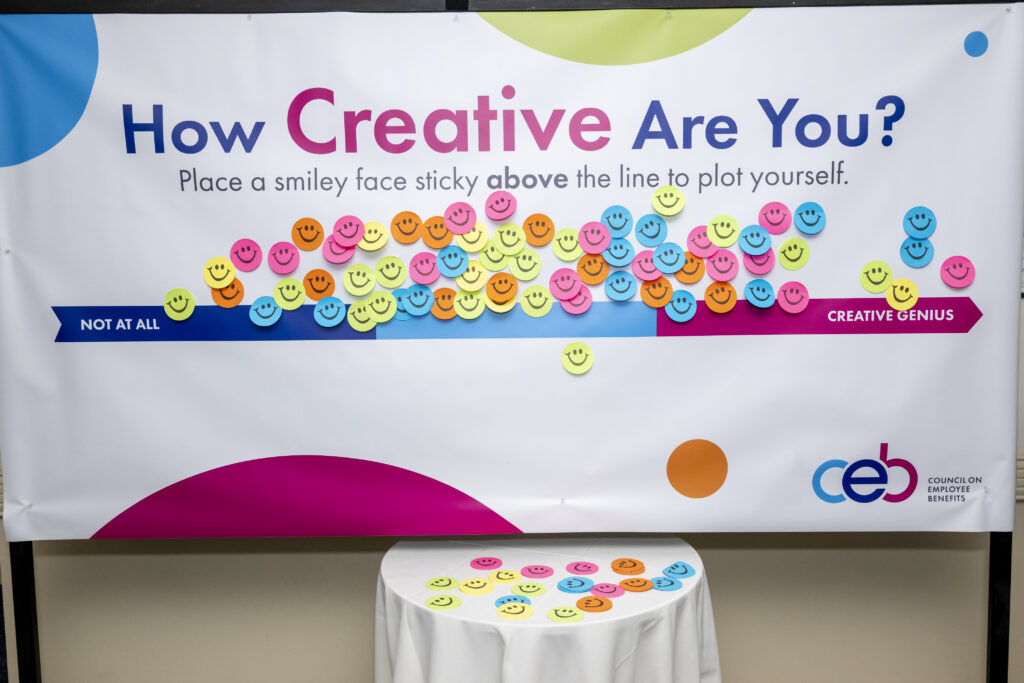
I often work with groups where people instantly score themselves low on creativity. When attendees at a recent Women in Mining Conference engaged with my keynote, their perception of their own creativity skyrocketed over 300%.
How? By simply reframing their definition of creativity, showing them the evidence of ubiquitous human creativity, and giving them some clear and actionable tools to take home. It’s not rocket science.
When people have the self-concept that they can be creative, and in fact, have been creative all along? The skies open.
You already have the tools; you just need to practice using them. Our perception and practice of creativity, much like TOA, are both skills that can be cultivated and enhanced.
Practical Strategies to build a Creative Mindset to become Awesome at Ambiguity
- Daydream: Studies show that giving your brain time to wander, especially when looking at nature, can help you connect ideas. Ever had an idea in the shower, on the drive to work, or while reading this article? I thought so. Go for a walk or stare out of the window and let your subconscious do the heavy lifting. Sometimes doing nothing is doing everything.
- Novelty: Seeking out new experiences builds confidence in your ability to navigate the unknown and adds data points for your wandering mind to discover insights. Actively increase your exposure to ambiguity by regularly attending new events, meeting different people, reading fiction, or visiting new places.
- Curiosity: Curiosity is a psychological attribute linked to tolerance of ambiguity. As a leader, you can consciously choose curiosity instead of knee-jerk, panicked solutions and assumptions. What do we know about the problem? How would we solve it if you had no limitations? A quick exercise? Channel your inner toddler and use the 5 Whys – keep asking why until you reach the root of the issue.
- Edit Later: Separate solution-seeking from the idea generation process. When brainstorming, let “bad” or “weird” ideas flow freely. You can always clean up the mess later, but it’s critical to allow all ideas to see the light of day. Some of those bad ideas? Terrible, bad, no good ideas. But they might spark another idea that could change everything.
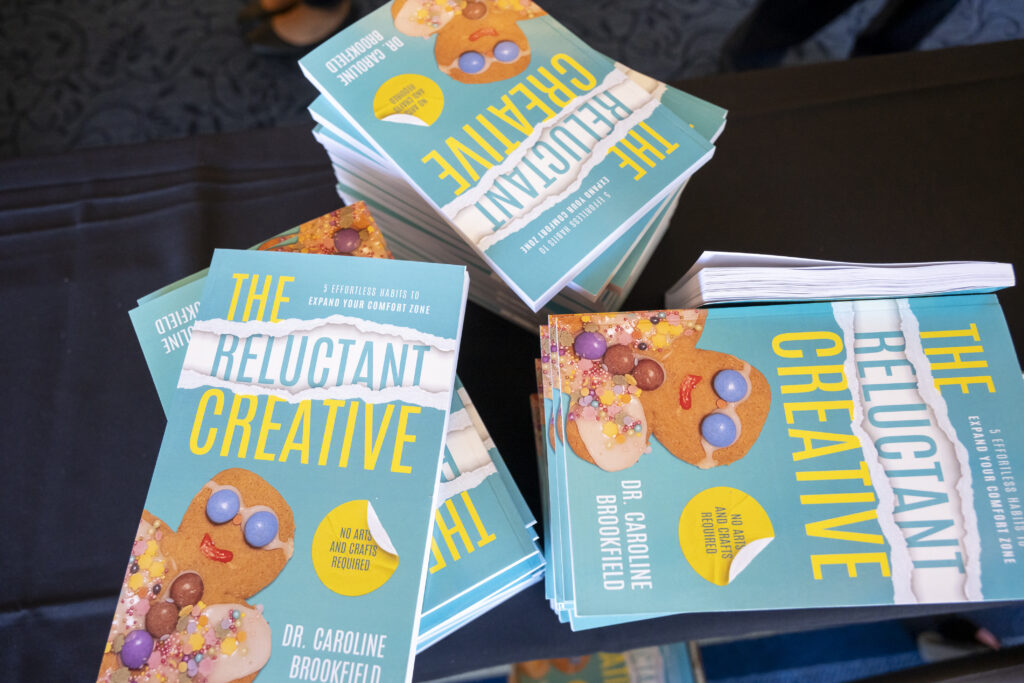
These strategies are part of my DANCE framework that I teach in keynotes and workshops and explain in my book, The Reluctant Creative.
Mindfulness as a Compass: Avoid the knot in your knickers
When we experience ambiguity, our brains go into survival mode. It doesn’t even have to be that much ambiguity. A gold or green dress? An optical illusion? We instinctively react to find immediate closure. Run away from the ambiguity! Douse the nasty ambiguity with certainty. It feels satisfying, but it won’t get the results you need in our complex and constantly changing environment.
This is where mindfulness comes in, donning blue tights and a mask to save the day. Mindfulness isn’t just meditation. It’s a mental practice to cultivate observant, open attention focused on the present moment in a non-judgmental way.
Mindfulness and Tolerance of Ambiguity (TOA)
Mindfulness serves as a powerful anchor for Tolerance of Ambiguity. It allows you to sit in the discomfort of ambiguity and respond from a grounded place, rather than reacting impulsively. The funny thing is that mindfulness is actually negatively correlated with creativity, which is thinking about future possibilities.
By sitting in the present moment, not freaking out about the future? It opens up space for you to consider limitless possibilities. Meta, huh?
By stepping back and observing without evaluation or attachment, we disengage from our habitual patterns of reactivity, which enhances our ability to cope with ambiguity and stress.
Tolerance of Ambiguity Exercises
One of my favourite activities when I work with groups as a tolerance of ambiguity keynote speaker, or in a workshop, is a knock-down-dragged-out staring contest. Many people have to fight the urge to look away, to lean into that discomfort of the awkward tension.
Practical Strategies for Mindful Leadership
- Micro-Meditation: You don’t need to attend a 10-day silent Vipassana retreat. Just 60 seconds of focused breathing before a difficult meeting can help you practice mindfulness. Try the physiological sigh, one of my favorites.
- Self-Awareness: Next time you find the words, “that will never work,” on your lips, stop and consider a new approach. Get curious! Ask for more details before making your judgement: “That’s interesting, tell me more?”
- Acceptance: Recognize that you do not have all the answers, but that you can take steps forward. This small shift is the difference between being frozen in resistance and agile progress.
With mindfulness, leaders become zen-like masters of emotional control, who can dodge crises like Neo in The Matrix. Well, maybe not quite. But you have my full permission to buy the coat. If you haven’t watched The Matrix? Go do that now.
Become a Proactive Leader: Adopting the Swim Instructor Mindset
So, now you have some actionable strategies to stop diving in to save your team and become the swim instructor instead: a proactive leader who gives your team the tools to succeed, rather than becoming a human life raft.
Complexity is our new sidekick. Not a good one like Robin to Batman, but an annoying, distasteful and unwanted sidekick. More like Joe Pesci.
The organizations and people who thrive will be led by proactive individuals who have learned how to leverage mindfulness and creativity to lean into ambiguity, to transform uncertainty into opportunity.
Success will come from teaching others how to swim as a swim instructor, instead of constantly trying to rescue everyone as a lifeguard. Now, before you get all literal on me, yes, we still need lifeguards. No downsizing on my watch in this theoretical metaphor for leadership!
You can develop your Tolerance of Ambiguity, to reduce burnout, increase your wellbeing, and your effective leadership during change. Start with leveraging two key human capacities:
Creativity: Think about something in your head. Try it in the world. That’s it. It’s not complicated.
Mindfulness: Consider this moment, right now. Stop worrying about the future and stressing about the past. Channel your inner Neo, dodging bullets. For extra points, do it in a meeting. Please film it and send it to me.
The good news is that by investing in training and development to build TOA, you foster the resilience and agility needed to succeed, even when you’re up the creek and hitting the fan.
Ready to Build a Team That Adapts and Innovates?

As a keynote speaker and facilitator, I speak to leaders in STEM fields, and “non-creatives” on how to improve tolerance of ambiguity, and to leverage creativity, to build resilience and confidence to thrive in an environment of constant change. In my keynotes using the 3C and DANCE frameworks, I engage and delight audiences with a combination of research, fun activities, thoughtful reflection and practical advice.
I’m accredited to facilitate and administer the IAM Ambiguity Assessment, a validated psychometric test. This evidence based assessment will identify your strengths and opportunities in all 9 dimensions of TOA. With individual assessments for every team member or leader, we can identify opportunities to build your leadership tolerance of ambiguity, and explore new and fresh ways to look at leading teams to success.
One of my favourite programs is a team-building session (virtual or on-site) to challenge paradigms, have some fun, and build the creativity and mindfulness needed to leap into 2026 with the confidence of a sugar glider on candy corn.
Limited Time Offer:
Get 2025 pricing locked in keynotes and workshops when you book an event before December 31, 2025. Help your organization get ahead of the curve for 2026.